Continuous Delivery Built the Floor AI Stands On
The teams moving fastest with AI are the ones who already had strong delivery discipline. The patterns map directly. If continuous delivery never took hold for your team, AI won't fix that. It'll make the gap visible faster.
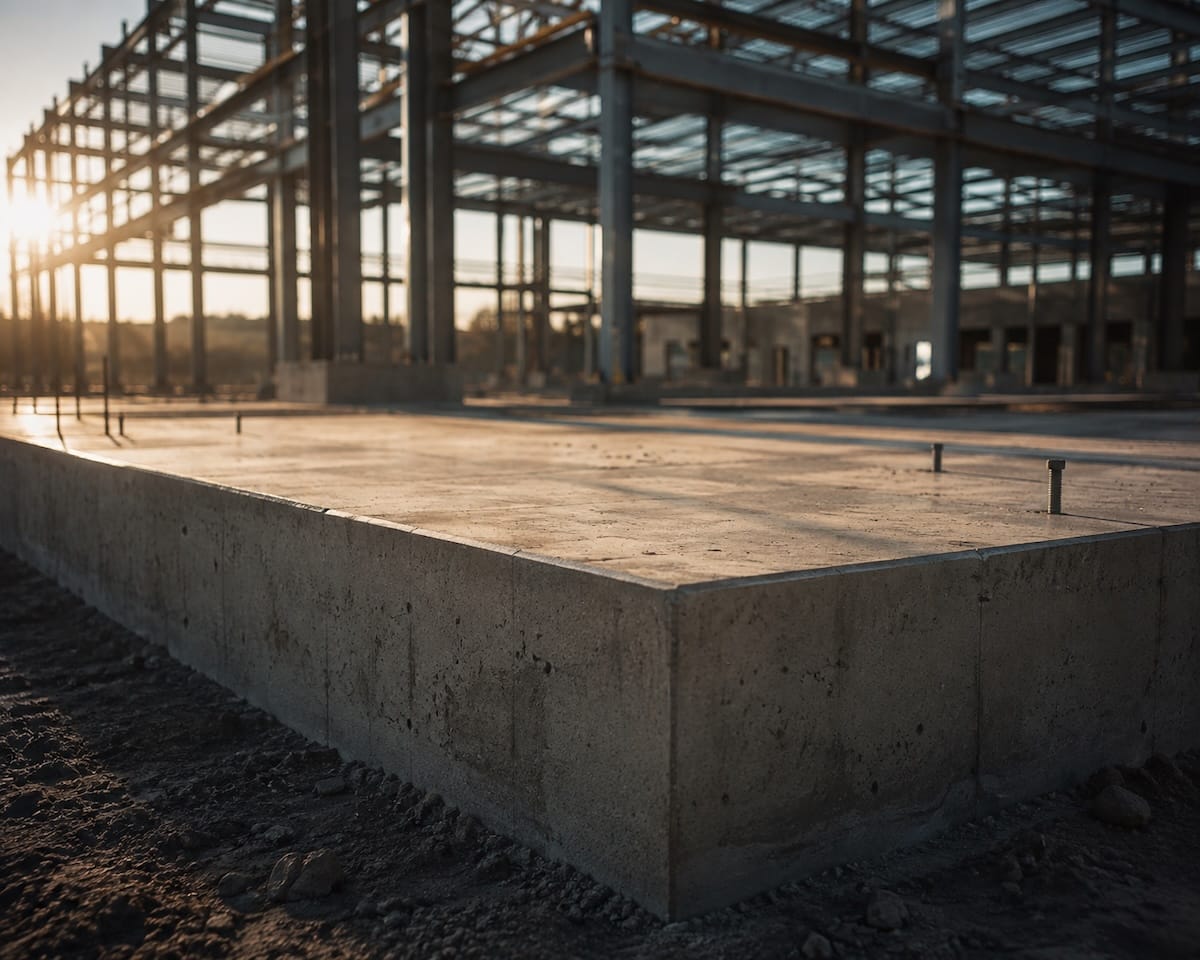
If you've spent any time in the AI engineering conversation this year, you've probably noticed a pattern. The teams moving fastest are the ones who already had strong delivery discipline before any of this started.
I keep seeing two types of teams. Engineers with mature CI/CD pipelines, automated testing and reliable deployment practices pick up agent workflows and the transition feels natural. Not easy, but natural as the patterns map. Automated review pipelines become AI review pipelines. Deployment gates become lifecycle gates. The instinct that automation needs guardrails, not just speed, is already there.
Then there are the teams where continuous delivery never really took hold. Maybe they didn't see what it would do for them. Maybe they tried to implement practices that didn't fit and lost trust in the process. Either way, they're still carrying big risky releases and insufficient testing coverage that lets defects slip through to customers, disrupting the team's flow when they have to circle back and fix what could have been caught earlier. Those teams aren't just struggling with AI, they're struggling with the same thing they were struggling with before, except now the feedback loop is so fast that the pain shows up in days instead of quarters.
The fear is about the wrong thing
Chainguard recently announced they're phasing out mandatory code review. If you read just the headline, that sounds reckless. But what they are actually doing is moving the human gate from code review to design doc review, and builing a fleet of specialised agents to handle code quality and plan alignment. A deterministic approval bot handles merges. No model, no judgment, just policy. Their agents opened 4,746 standards-fix PRs in eight weeks and auto-merged 75% of low-risk changes.
They can do that because their delivery discipline is already mature enough to restructure where humans spend their time. The review doesn't disappear, it just moves earlier in the process, to where it has more leverage.
Engineers raising concerns about this aren't wrong, code review matters, but let's be honest about what a lot of code review actually was. A huge number of PRs were theatre, someone skimming a diff, leaving a comment about naming or formatting, clicking approve. The process looked like rigour but mostly resulted in taste arguments. It definitely does catch issues, but it wasn't the common outcome. The cost in cycle time was constant.
A lot of teams treated code review as their last line of defence before production. Losing that feels dangerous, but the question is whether your process is strong enough that it no longer needs to be the last line of defence.
If your answer is no, the problem isn't AI, it's delivery (or process) maturity, and AI just made it visible.
The skills transfer
Continuous delivery taught a specific set of lessons that turn out to be exactly what agent workflows need. The mapping isn't even subtle once you see it.
If you learned to break work into small, independently testable and deployable pieces, you already know how to scope agent tasks. The teams handing an agent an entire feature and hoping for the best are the same teams that used to do two-week integration branches and wonder why merges were painful.
The automation discipline transfers too. CD [continuous delivery] teams already trust machines to catch categories of problems — linting, type checking, integration tests, deployment checks. That automation worked because it was tightly scoped and each tool had a specific job, limited permissions, and a clear boundary. AI agents need the same constraints: specific tool sets, sandboxed environments and scoped permissions. Teams that already learned to constrain automation are the ones building agent workflows that are safe to run unsupervised.
I think the lesson people underestimate is fast recovery. If you've built a pipeline where a bad deploy gets caught and rolled back in minutes, you've already internalised something most teams struggle with: not every problem needs to be prevented upfront. Some can be detected and recovered from. That applies directly to agent-generated code, so you don't need to guarantee every line is perfect, you just need to know when it isn't and have a path back.
Then there's the stuff that's so obvious CD teams forget they're doing it. Encoded conventions — formatting, test coverage thresholds, security scanning, dependency audits — baked into the pipeline so enforcement doesn't depend on someone remembering. A CLAUDE.md or a set of agent skills is just a different version of that same idea.
And the one that ties it all together: continuous maintenance. A delivery pipeline isn't something you build once and walk away from. New edge cases show up, failure modes change, standards drift and tools evolve underneath you. The teams that got CD right already have the muscle for this. Their agent conventions, review layers, and lifecycle gates get the same ongoing attention their deployment pipeline always did.
The gap this reveals
There's now evidence that teams using AI coding tools frequently but without mature pipelines hit more deployment problems, longer incident recovery times, and more burnout. They got faster at producing code but their pipeline couldn't absorb it. I wrote about this earlier in the year — the vibes don't scale. Speed without process just means you produce problems faster.
That's what happens when you add velocity without adding the infrastructure to absorb it. As I wrote in my open letter to leaders: in the previous era of software, you could hide a bad process and still get results. In this AI-led era, a bad process can't be hidden and will come back to kick you in the ass sooner and harder. The feedback loop is so much faster now that the pain shows up before you've had time to pretend it isn't there. CD teams learned that lesson about human-speed delivery a decade ago. The teams learning it for the first time with agent-speed delivery are having a much rougher ride.
I practice this every day. We don't write code at Swamp: agents do the implementation, humans own the intent, the constraints and the acceptance criteria. I know how that sounds, and I know it makes some engineers deeply uncomfortable. But it works, and the reason it works has nothing to do with the models being smart enough to trust blindly. Every change goes through an eleven-state lifecycle with three human gates and transitions enforced in code with multiple independent layers of adversarial AI review on every PR. The research each stage produces gets stored so the next agent retrieves it instead of re-investigating from scratch. The humans are on triage, plan review, and PR authorisation, the agents are on implementation and before anything reaches a user, the produced binary goes through a separate layer of user acceptance testing and adversarial security testing. The delivery infrastructure is what makes that division safe. Bugs still happen, they always will but the difference now is we find them faster, remediate them faster, and then adapt the process to try and prevent them next time. That's the same feedback loop continuous delivery always promised. It just runs quicker now.
I don't think we'd have got here if our team didn't have experience of building reliable delivery systems first. The AI process isn't actually the novel part, it's the engineering thinking underneath it is what we'd been doing all along, now just applied to a faster system. I'm not sure we'd have known what to build without that background.
What this means if you're worried
If you're an engineer watching Chainguard's announcement or reading about teams dropping code review and your instinct is that something important is being lost, lean in to that instinct, but be specific about what you're actually protecting.
Wanting systematic verification that code is correct and fits the architecture is a legitimate engineering requirement. Build it. Layers of automated review are more systematic than one human skimming a diff.
Wanting to understand what's changing in the codebase is about knowledge sharing. Where that review happens — code, design docs, somewhere else — is a process decision every team has to figure out for themselves.
And if the worry is that you don't trust the process to catch problems without you personally reviewing every change, that's worth examining. Either the process genuinely isn't strong enough, and the work is building a stronger one. Or it's stronger than you're giving it credit for, and the discomfort is about the role change, not the safety.
The teams getting this right aren't the ones with the most sophisticated AI tooling, they're the ones who spent years building the delivery discipline that makes AI tooling safe to use. If you have that discipline, you're better positioned than you think. If you don't, that's where the investment needs to go, and it would have been worth making even without AI.
In an AI world, outcomes over output is the best measurement of whether it's working. In a continuous delivery world, the teams were already striving to get outcomes for their users faster. That's a more of a reality now than it's ever been. Everything continuous delivery taught you still applies and those instincts are right. The work is the same work it always was, just pointed at a faster system.