ai Gatekeeping in the Age of AI Every shift in software has been told it’s already solved. With AI, that pushback has become gatekeeping, and it risks talking us out of the biggest chance in decades to change how we build.
Building with AI Why Agent-Written Code Needs Product Verification Whether your tests catch real defects is not a property of the test level. It is a property of where the expectations come from and who can change them. The expectations have to come from outside the implementation loop — and those expectations need to be protected.
Building with AI Your Agent-Written Tests Aren't Real Tests Over twelve thousand agent-written unit tests, all green, and the boundary is still where we find out the code is wrong. Agent-written tests are specification, not verification — a map for the next agent, not proof the code works.
Building with AI The Provenance Gap in Agent-Written Code When an agent owns the verification-and-repair loop, what record of that process survives? The attestation captures the terminal state. The iterations that preceded it — the failures, the fixes, the diagnostic path — vanish the moment verification succeeds.
Building with AI The Feedback Loop Is Moving Out of CI Paul Hammant pointed out that Google separated verification from merge coordination more than fifteen years ago. He was right. What actually changed is who owns the feedback-and-repair loop — and that shifts what CI needs to be.
Building with AI AI Broke the Assumptions Behind CI CI conflated two jobs: executing verification and coordinating merges. Agents change the equation. If you can verify before the PR opens and fix failures in context, why should CI discover them first?
Building with AI Black Box Tests Are Your Most Valuable Asset When an agent writes the code and the tests, passing doesn't tell you much. Black box acceptance tests are the independent verification boundary that actually matters.
Building with AI Continuous Delivery Built the Floor AI Stands On The teams moving fastest with AI are the ones who already had strong delivery discipline. The patterns map directly. If continuous delivery never took hold for your team, AI won't fix that. It'll make the gap visible faster.
Building with AI Practices Have a Half-Life. Architecture Shouldn't. Vibe coding, spec engineering, loops, graphs. The labels keep changing because the model keeps changing. Every practice you build to compensate for today's model has a half-life, and the model is what's setting the clock.
Building with AI An Open Letter to Leaders: Your Job Isn't to Have the Answer I've had versions of this conversation with founders, CTOs and engineering leaders every week this year. The three reasons they give for waiting are all real concerns — and all three are pointing at the wrong problem.
Building with AI The Great Divergence in Software Engineering Six months into 2026, the difference between teams using AI effectively and teams still evaluating it isn't a head start anymore. It's a different way of working entirely. And the gap isn't just widening — teams are actively moving in opposite directions.
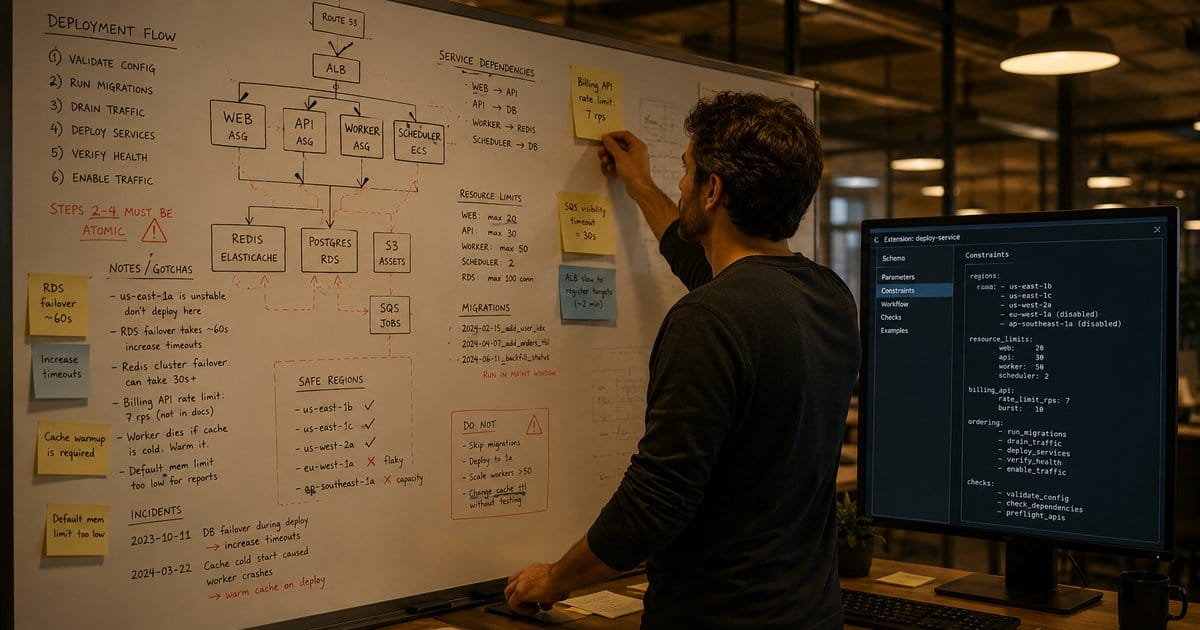
Building with AI The First Step on Your AI Journey Is Encoding What You Already Know Every company has this person. The engineer who every production change flows through because they're the only one who knows the constraints. If you're thinking about putting AI agents anywhere near your infrastructure, encoding what that person knows is the first problem to solve.
Building with AI Intent Is The New Architecture The sovereign cloud movement is forcing a question the industry has been avoiding. When you have to move off a hyperscaler, the bottleneck isn't the new provider's APIs. It's how precisely you can express what you actually need. Intent is becoming the architecture that matters most.
Building with AI High Trust Teams With Agents Are Unstoppable High trust doesn't mean no guardrails. It means everyone understands the direction well enough to act independently within it. When you pair that with the right systems, every person on the team can advance the product every day.
Building with AI The Rearchitecture Your Team Could Never Justify Every codebase has the rearchitecture that never gets prioritised. We split ours into six parallel workstreams and shipped it in eight days, start to finish. The hard part wasn't speed. It was coordination.
Building with AI When Building Is Easy, the Danger Is Building Everything When agents can build anything in an afternoon, the temptation is to build everything. The products that survive are the ones where someone had the discipline to say no.
Building with AI Take the Leap Before You Are Pushed The fear of AI replacing your work is real. So is the shift. The teams that build structure around agents instead of resisting or rushing find the job gets better, not smaller.
Building with AI The Code Was Never the Job Five of us build swamp. None of us write code. Agents write it, review it, test the binary. The work didn't shrink — it shifted to the decisions that were always the most valuable.
Building with AI Your Agent Is Starving Five people, $3,000/month, zero lines written manually. GitHub just moved to per-token billing. The era of flat-rate pricing absorbing your agent's inefficiency is ending. Your agent isn't the bottleneck. What you're feeding it is.
Building with AI The Community Pull Request Is Dead The PR-as-contribution model was built for a world where writing code was the bottleneck. AI agents broke that assumption. GitHub shipped a kill switch on PRs. Hashimoto built Vouch. We closed the door entirely. The community pull request is dead. Here's what replaces it.
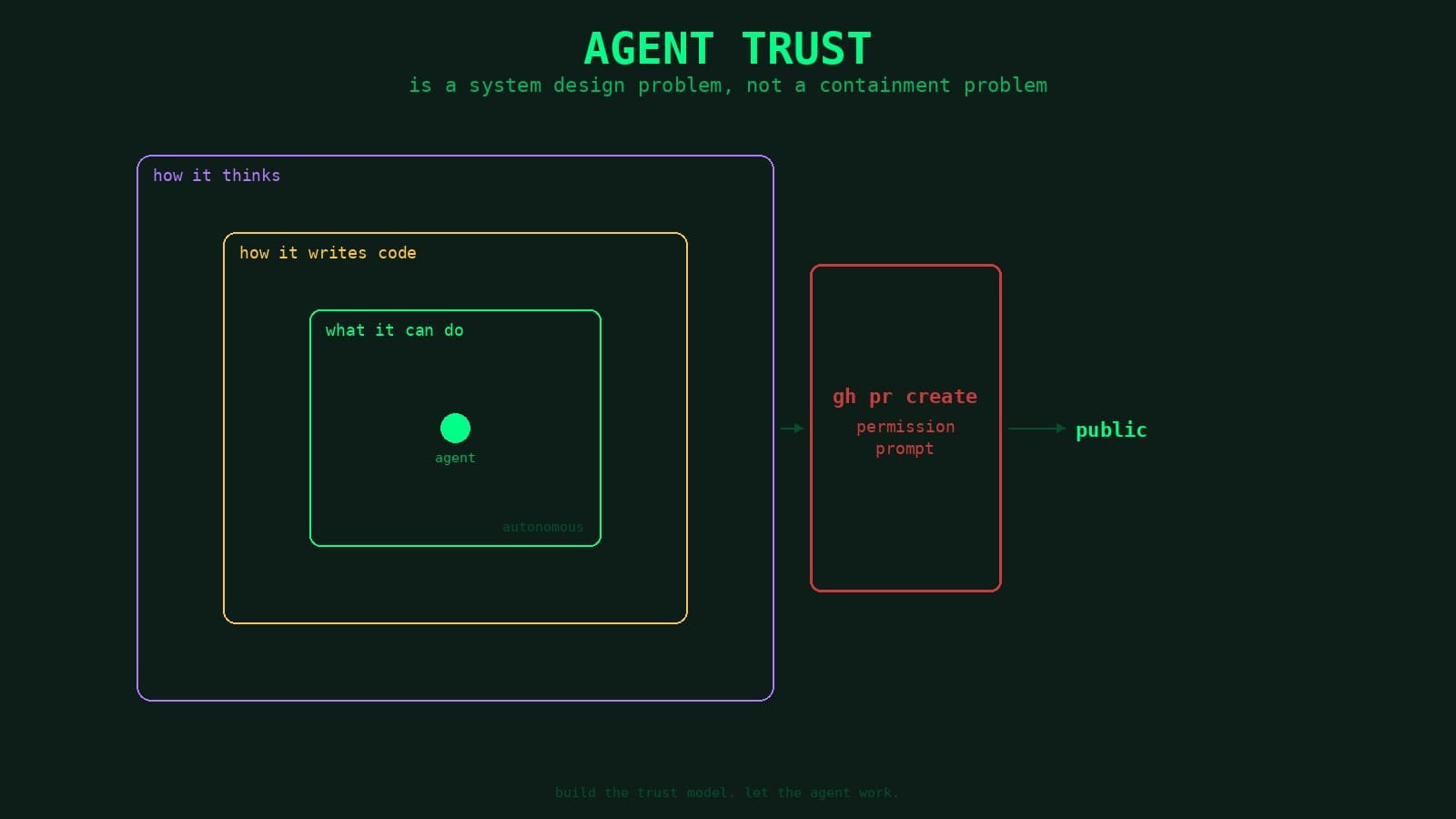
Building with AI Agent Trust Is a System Design Problem Most people hit "always allow" within the first hour. Agent trust is a system design problem, not a containment problem. Three layers of permissions, conventions, and context let the agent work autonomously where it's safe and stop it at the boundaries that matter.
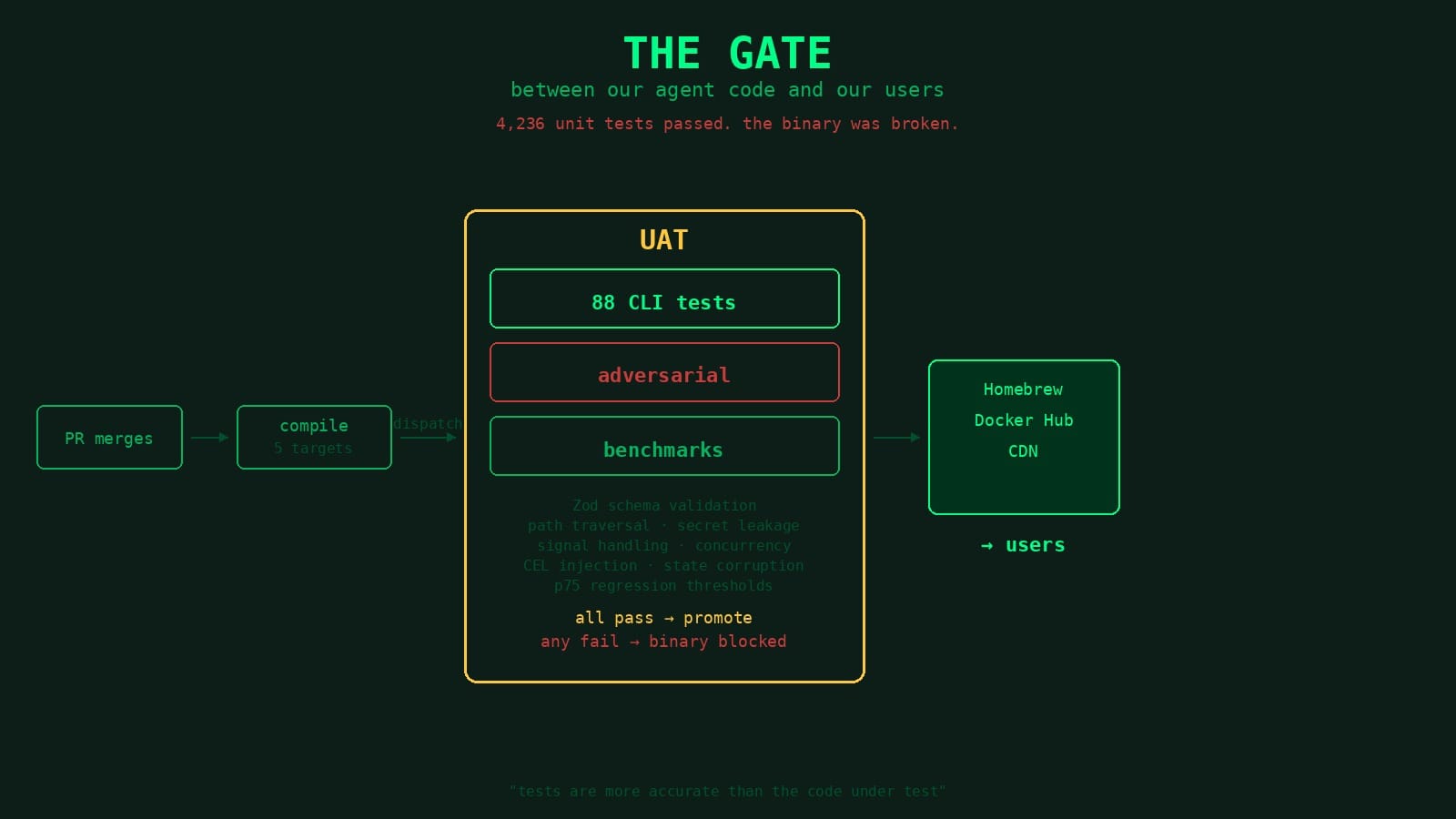
Building with AI The Gate Between Our Agent Code and Our Users Every release binary gets dispatched to a separate repo running CLI tests, adversarial security tests, and benchmarks. Three recent bugs — all with full unit test suites passing — never reached a user because the UAT caught them in minutes.
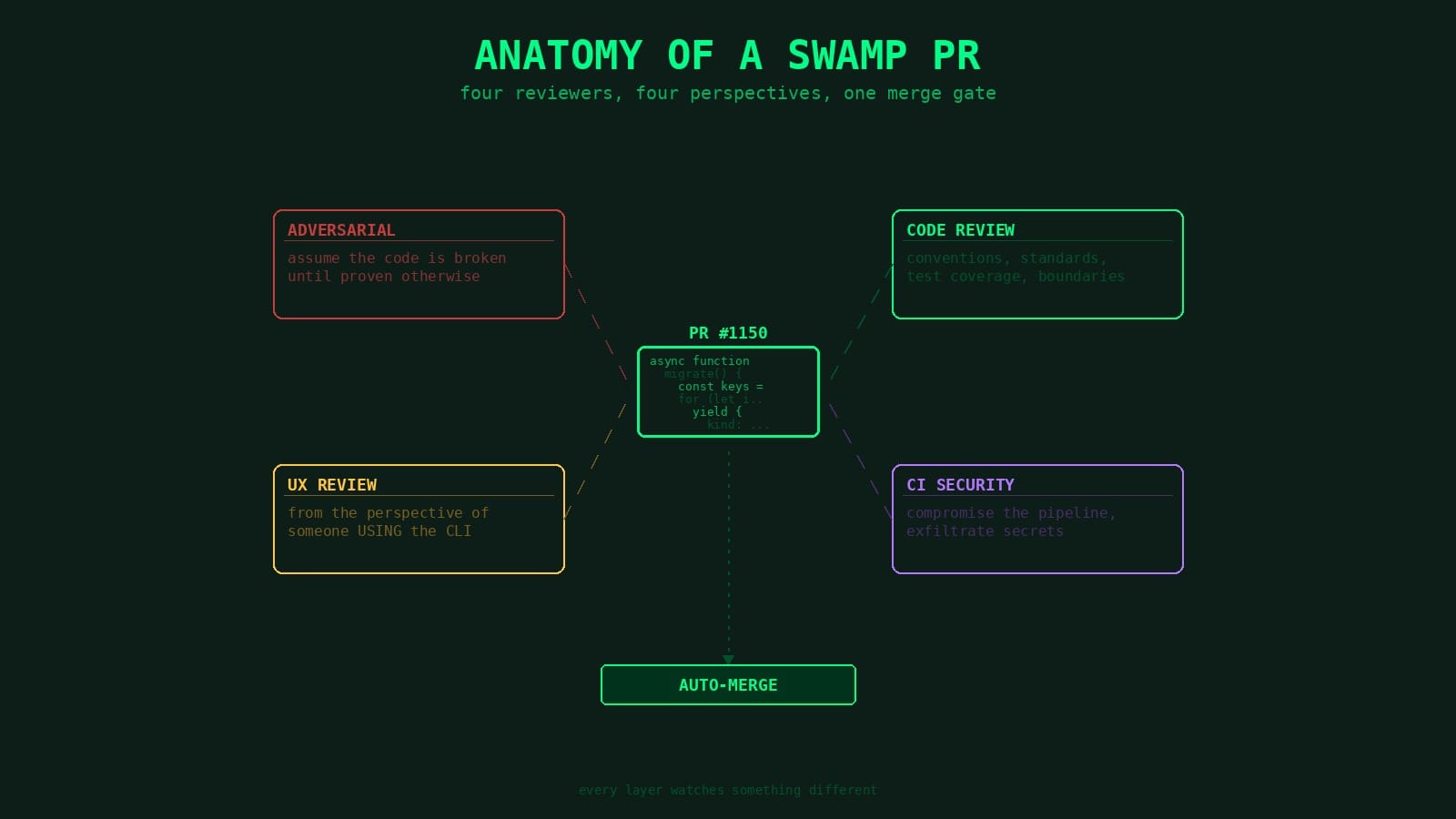
Building with AI Anatomy of a Swamp PR Agents open PRs in our repo. Other agents review them. That means untrusted input flowing through models with merge authority — so we built a pipeline with four independent AI reviews, scoped tools, and a security review that watches the reviewers.
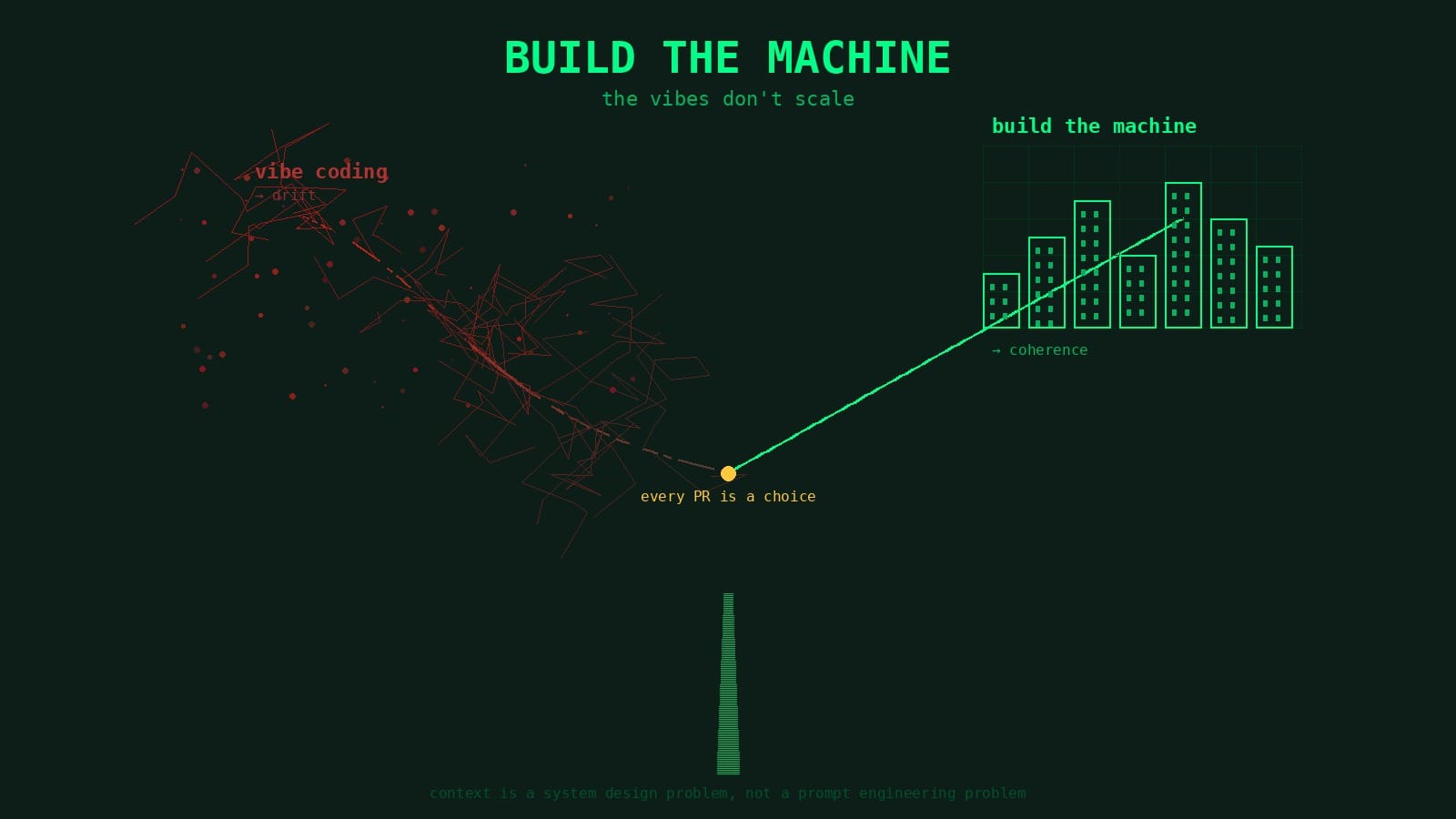
Building with AI The Vibes Don't Scale Vibe coding works great for the first few PRs. Then you do it two hundred more times and the codebase quietly stops making sense. The fix isn't better prompts — it's building a machine that compounds.
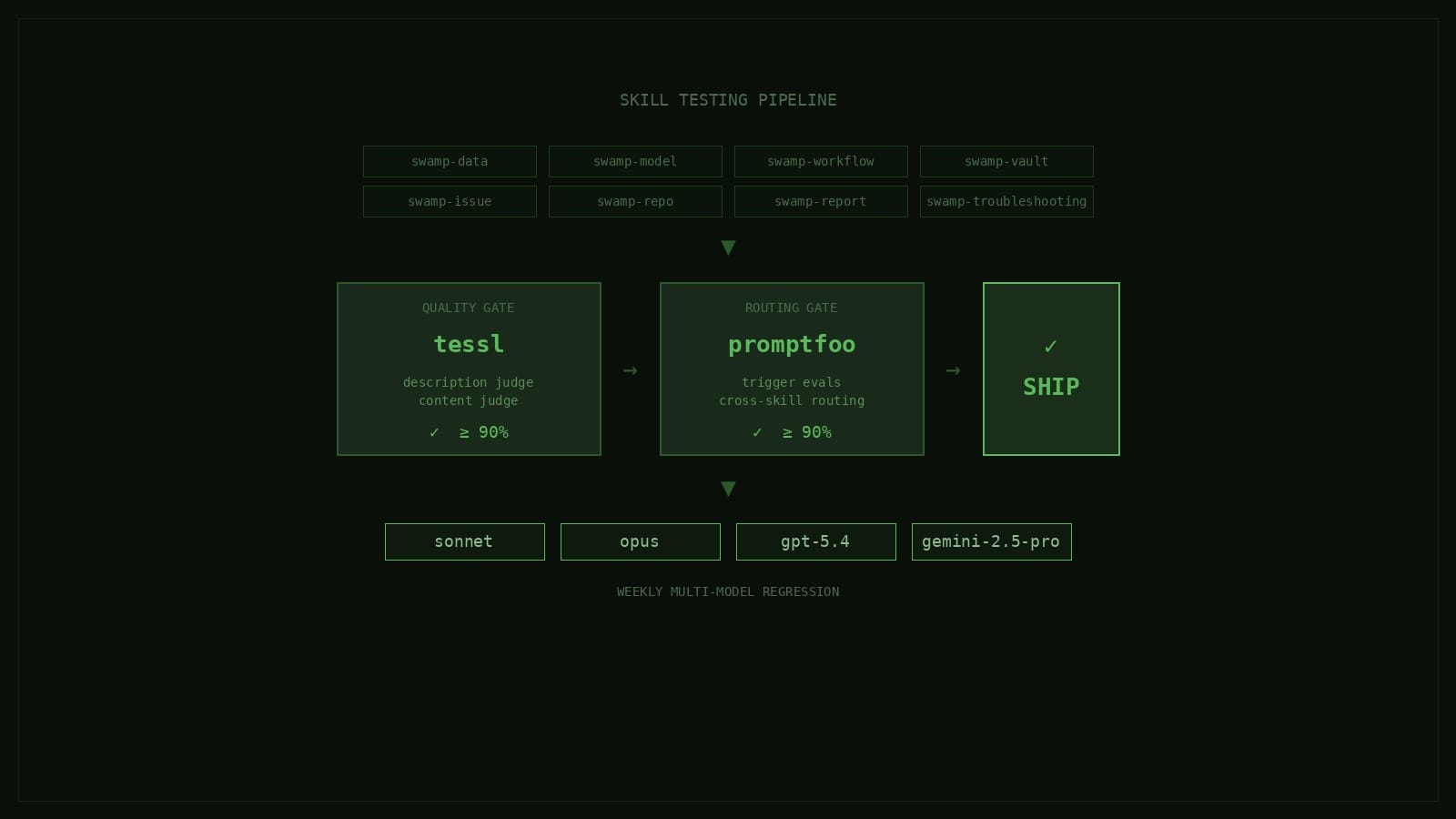
Swamp Skills Are Context, and Context Needs Tests Skills are context. They're the thing an agent reads before it decides how to use swamp. If the skills are wrong, everything downstream is wrong — so we test them in CI the same way we test code, using tessl for quality and promptfoo for routing, across every model we care about.